Manhattan Project - 1940's
The Manhattan Project of the U.S. Army Corps of Engineers was the code name for the development of the first atomic bomb. Under the auspices of the U.S. Atomic Energy Commission, the Manhattan Engineer District or Manhattan Project was developed in the early 1940’s. This started the need for the development of new portable radiation measuring instruments and the birth of the term "Health Physics", a non-descript term to describe the health effects from radiation. It was a code name for radiation protection activities and the fact that a group of mostly physicists were working on health related problems. Others noted the name merely denoted the physics section of the Health Division at the Met Lab. The term was coined at the Metallurgical Laboratory (MET Lab) of the University of Chicago in 1942. E.O. Wollan at the University of Chicago was asked to form a group to study radiation hazards. Eanest Wollan formed the Chicago Health Group to study and control radiation hazards and became the first known "health physicist". Other key names in the field were Carl Gamertsfelder, Herbert Parker, Karl Z. Morgan and O.G. Landsverk. The first atomic pile began operation on December 2, 1942 at the University of Chicago, Metallurgical Laboratory. Health physics faces many challenges which included designing and testing new measuring instruments, shielding development, determining absorption and scattering, determining tolerance levels, and supporting separation processes.
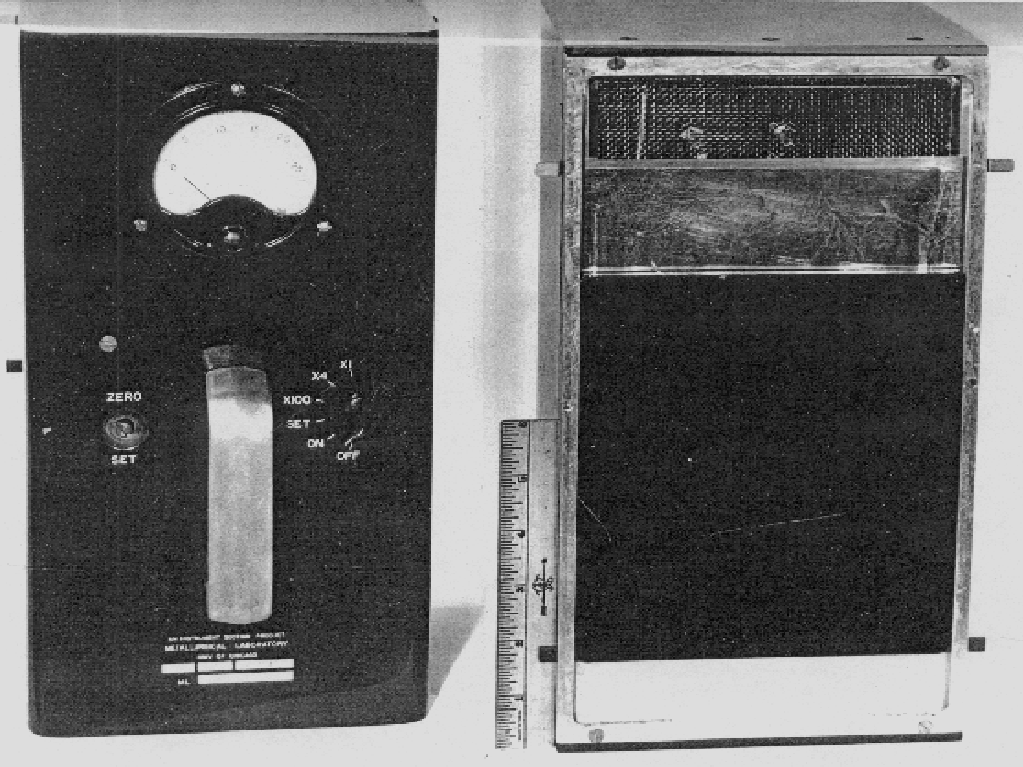
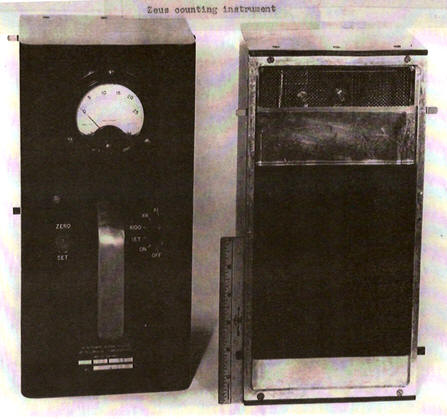
One instrument developed at the Met Lab was the Zeus by W. P. Jesse in 1945. It was an ionization chamber with a sliding thin aluminum or plastic shield over the 5” x 6” detector window located on the bottom of the unit for measuring alpha, beta and gamma. Stafford Warren was a radiologist and medical educator and Professor of Radiology at the University of Rochester School of Medicine. He became the civilian advisor to the Manhattan Project in 1943. He became a Colonel in the Army Medical Corps and Chief of the Medical Section (from Radiology in World War II by K. Allen, U.S. Army, 1952. (1) Pictures used with permission of the Stafford Warren Collection at UCLA Charles E. Young Research Library, Department of Special Collections.
In order to survey the table tops, hoods, desks, floors, wall, etc. for contamination, the Zeus and Zeuto were used. These instruments have a series of sliding windows of materials to measure alpha, beta and gamma radiation. They were designed to measure on a flat surface.
Zeus Mark 1, Model 21-A 1945
Zeus Mark 1, Model 21-A 1945 (1Picture, on right, used with permission of the Stafford Warren Collection)
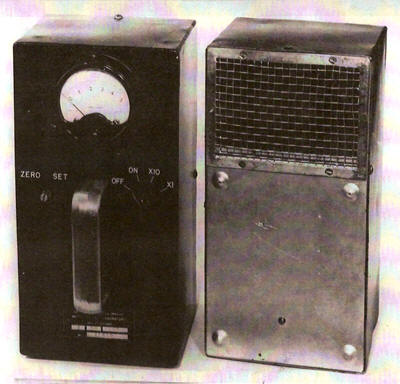
Zeuto 1940's (1
Picture used with permission of the Stafford Warren Collection)The Oak Ridge pile at the Clinton Engineer Works (later became the Oak Ridge National Laboratory) began operating on November 2, 1943. It turned out that the scientist and engineers were so interested in their work that they often overlook the radiation hazard. Uranium, which is used in the piles, was not very radioactive. However, when irradiated it produced fission products and plutonium, which cause a more series radiation hazard. It was also noted that a worker walking by an experimental hole in the pile would not suffer an immediate reaction, but could receive a high dose which would show up a few days later. As such, instrumentation needed to be developed that could measure higher and higher exposure rate levels. The exposure rate levels were increasing rapidly from mR/h from basic studies to 100's or 1000's of R/h for fission products in plutonium production reactors.
Early portable radiation instruments were developed at both the Clinton Engineer Works and the University of Chicago. Many of the details of these instruments remained classified until the late 1940’s. In 1947, it was reported by K. M. Morgan that over 30 types of instruments were used by the radiation surveyor group. Additional radiation detection instruments were developed at Hanford Laboratory in Washington (where plutonium was produced) and the Los Alamos Scientific Laboratory (now Los Alamos National Laboratory) where the early atomic bomb development work was conducted.
Many of the doorways at the atomic energy plants are surrounded by an "octopus" of GM tubes that were connected to an audible alarm. This was used to detect workers that received contamination on the their clothes. A GM probe near the door was used to find the contamination and remove it.
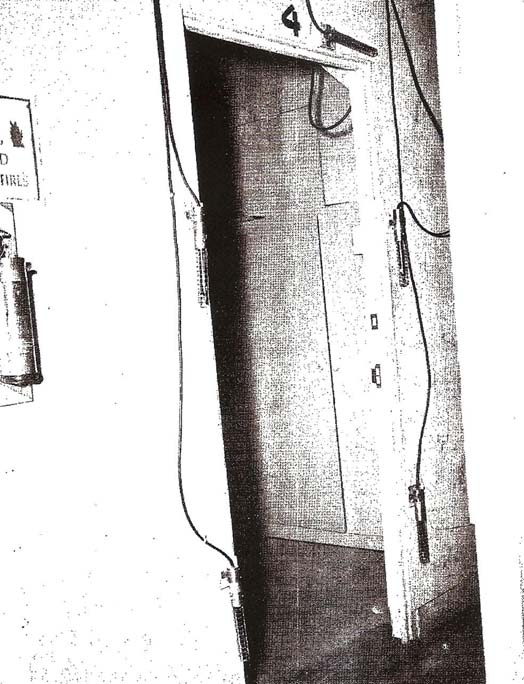
String of GM detectors around a door to detect personnel leaving that have picked up contamination, Clinton National Laboratory 1947
In order to monitor radioactivity in the air, large ionization chambers, called X-22 chambers, were used. The chambers were located in "dog houses" located at various distanced from the plant. Some dog houses had pump and air filters which were monitoring by a nearby GM tube. The radioactive dust settles on the filters which simulates what someone nearby would inhale.
In 1945, the AEC cataloged the available radiation instruments throughout the Manhattan Project complex by Mark and Model number. Mark 1 was the designator for Survey Instruments - Area. Mark 2 was the designator for Survey Instruments - Probes. At the time, there were only five commercial companies making radiation detector systems. As a result, the government established instrument development centers in Chicago, Oak Ridge and Los Alamos to build radiation detection equipment to support the Manhattan Project. As the war ended, experienced equipment developers from the national laboratories began starting their own companies to produce the equipment. The companies started out modestly but with high technical competence. From 1946-1948, the market was primarily for the military, AEC or universities. The use of radioisotopes in industry and the medical field was increasing. The Navy primarily went with the larger companies, whereas the AEC dealt with the small companies. The number of companies increased from 44 in 1948 to 73 in 1954. Sales increased during the same period from four to thirty million dollars annually.
One of the first instruments developed at the Clinton Laboratories was the “Cutie Pie” in 1944 by C.O. Ballou and H.U Fisher. It was a portable beta-gamma radiation meter with “exceedingly small dimensions and weight”. The unit weighed 4 lbs. 2 oz and is carried in a pistol grip. Exclusive of the handle and chamber, the unit is 3” wide x 6.5” long x 5” high. It was named Cutie Pie due “to its diminutive size”.
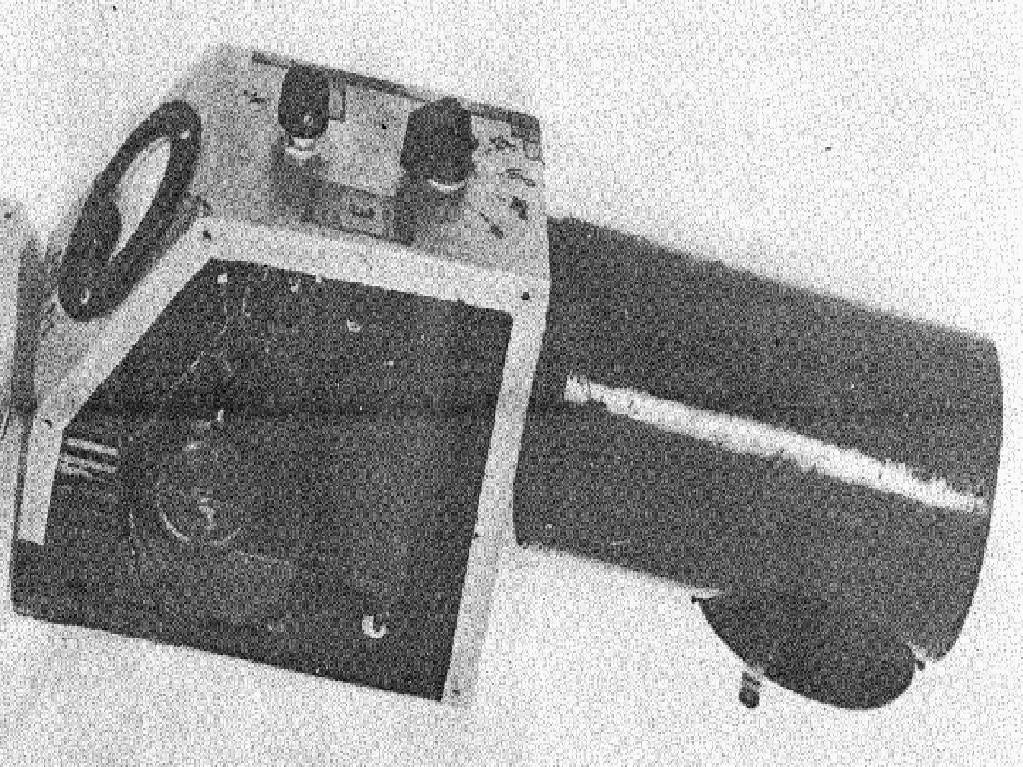
Original Cutie Pie Ion Chamber 1944
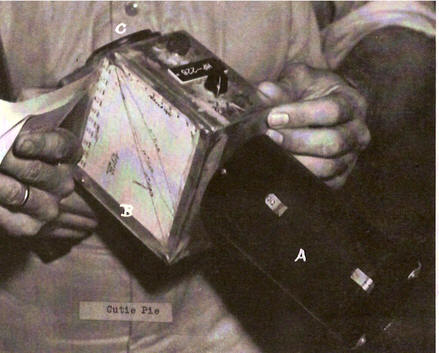
Cutie Pie Ion Chamber 1940's (1Picture used with permission of the Stafford Warren Collection)
The name has been the debate of many discussions, some indicated it referred to the charge collected on the chamber Q x t x pi (referring to change collected in a two pi chamber) or it could be just the early response when first observed “that is a real cutie pie”. The Cutie Pie was declassified in 1946. It had a hinged window on the front end of the chamber to allow changing absorbers and thereby measuring betas and gammas. It used seven small batteries and provide three ranges.
Prior to the late 1940's, radiation measuring instruments and in fact, the Manhattan Project in general, remained for the most part classified. As such, many of the names given for the instruments were code names to hide their use in everyday discussion and written correspondence. Much of the documentation pertaining to was declassified in the late 1940's and early 1950's. Some examples of the naming of the radiation measuring instruments is presented in the following paragraphs. According to Don Collins in his interview, he contacted Walt Disney to get permission to use some of Disney's character names as code words for the instruments. Names such as Pluto, Sneezy and Doc were used. Pluto was the alpha meter. They pasted a picture of the character on the side of the instrument with its nose by the grid on the ion chamber as if he was sniffing for alphas. Hallicrafters in Chicago produced one run of instruments and then Victoreen began making them. An interesting story is that a report described a spill that was detected using the Pluto meter. An aid to General Groves thought he wouldn't know what a Pluto meter was so he changed it to Plutonium meter. This changed the classification of the report and Grove hit the ceiling. That prompted the name to be changed since it was to close to Plutonium and the order came to discontinue the name Pluto. The new officer decided to call it Sandy and the comments were that Pluto was a dog and Sandy was a dog, so what is the difference? Turns out, Sandy never caught on. Additional instruments were given the names of Greek gods such as Juno, Zeus, etc. One name took a combination of Pluto and Zeus to give Zuto or Zeuto. (Don Collins interview notes are from the National Radiobiology Archive Project, report PNL-9612, 1978).
The Argonne Poppy Model CLM-41 was developed to meet the demanding alpha survey work required by the Manhattan Engineering District as early as 1945. It was designated the Mark 2, Model 20. The semi-portable survey meter had a two cycle log meter 100 to 10,000 cpm. It was a cabinet size with external loud speaker. It was called the poppy because of the "pop" sound it generated when the alphas were detected.
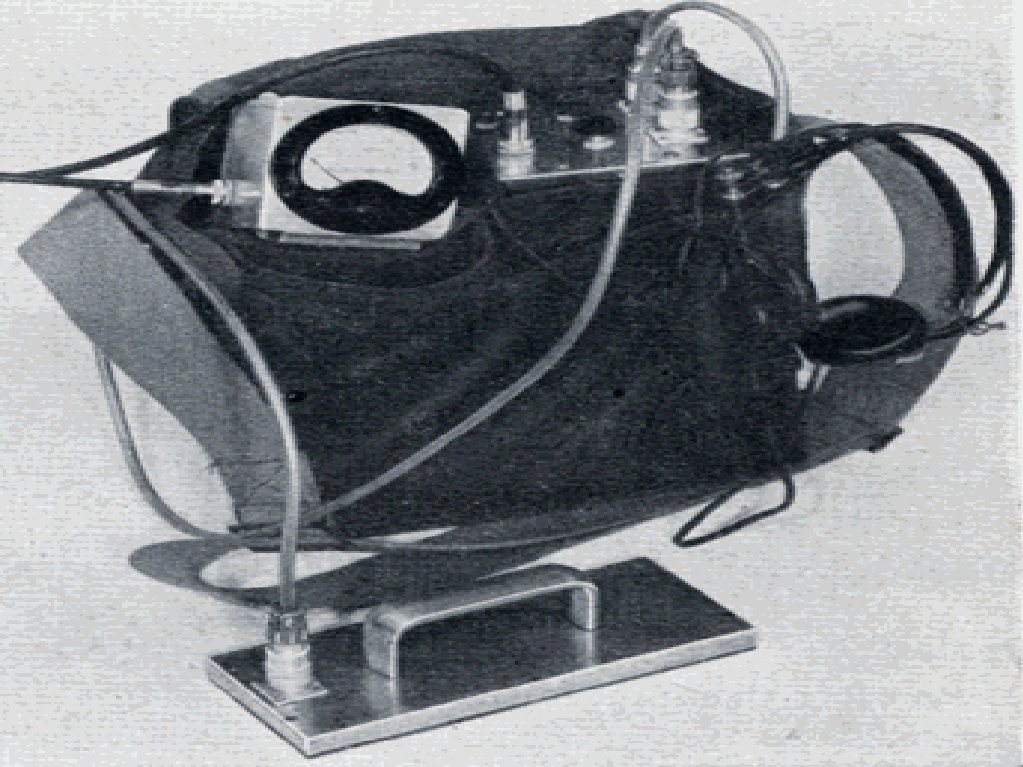
Argonne Poppy Model CLM-41 1950
For alpha contamination, Poppies, were used. The following is a very early 1947 version used at Clinton Laboratory. These were probes with thin windows to measure alpha and the instrument would make a "pop" sound when detecting alphas, hence the name Poppies. The frequency of the pops indicated the amount of radioactivity. The instrument was very popular since it would warn the operator of alpha contamination.
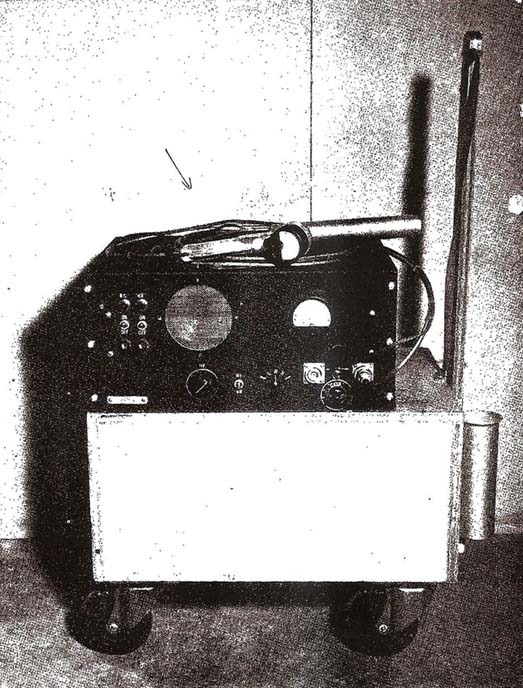
Poppy alpha particle detector at Clinton National Laboratory 1947
In 1945, there was only one instrument to measure alpha contamination, the Pluto developed at the University of Chicago. The Los Alamos Scientific Laboratory under the direction of Richard J. Watts developed an Alpha Contamination Snooper called “Super Suds”. It has a chamber with free flow methane gas. Since there would be no repair facilities, a simple alpha counter was designed and 12 assembled in two weeks as a stopgap measure. A total of 24 units were eventually assembled. As the Manhattan project progressed, it became evident that the trend was to measure radiation of higher intensities. This included the water boiler, the criticality measurements at Omega, the Ra-La (radio-lanthanum) experiments, and the Trinity Shot. At Los Alamos, the Roentgenometer Super Suds was developed in 1945 to meet this need.
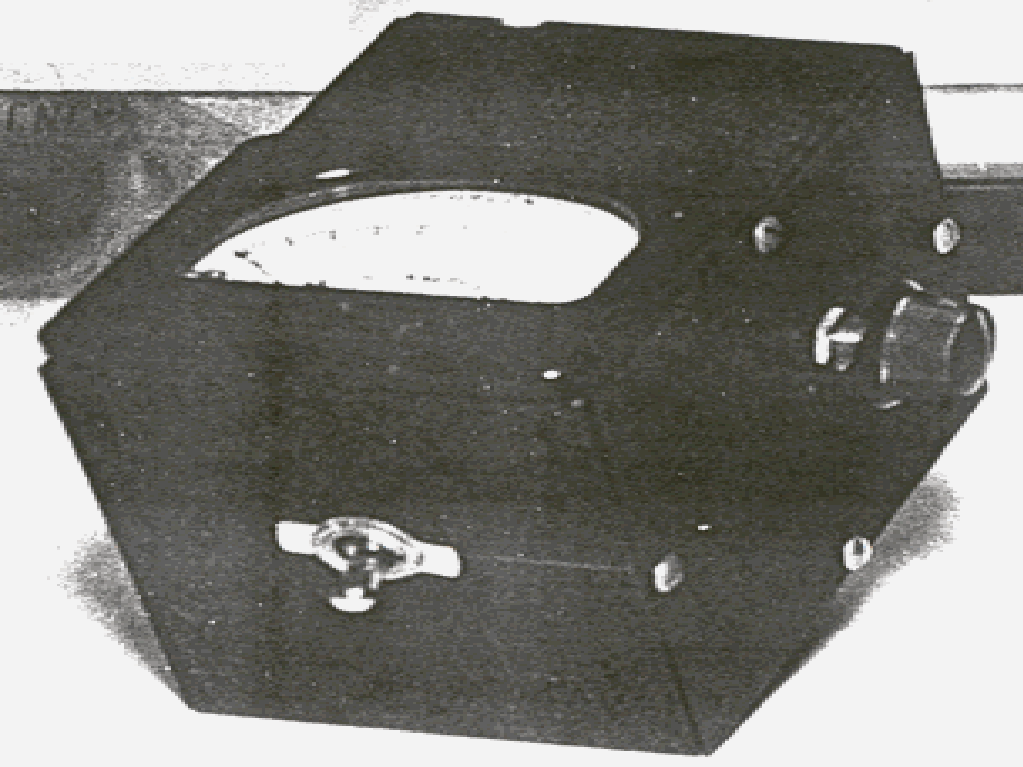
Los Alamos Roentgenometer Super Suds 1945
The Lauritsen and Landsverk-Wollan electrometers or electroscopes for monitoring radiation. The units were simple to operate and held their calibration for months. They also gave consistently reliable results. Some have very think windows (a sheet of cellulose acetate) to measure alpha and beta radiation. For gamma measurement, the window is covered with bakelite or wood. The inner walls of made of very low atomic number materials. The goal is to have the walls about the same atomic number as air.
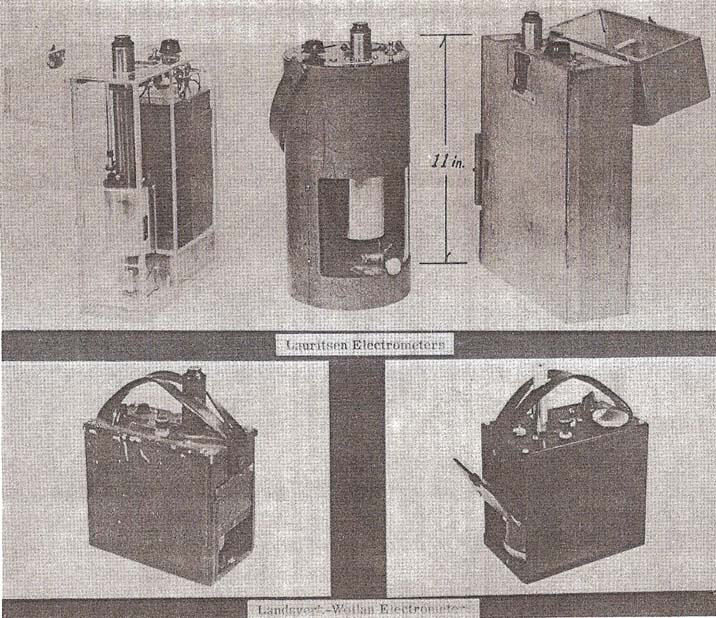
Lauritsen and Landsverk-Wollan Electrometers 1947
J. H. Larkins, of the the Los Alamos Scientific Laboratory, developed the Pee Wee in Dec 1947 as a portable proportional counter alpha survey meter. The unit came in a grey anodized aluminum case and bakelite bottom with doors on each end for easy servicing. It came with a canvass case to protect it from contamination and for ease in carrying. The probe pocket was attached to the main bag with snap fasteners so that it could be removed when the bag was laundered for decontamination.
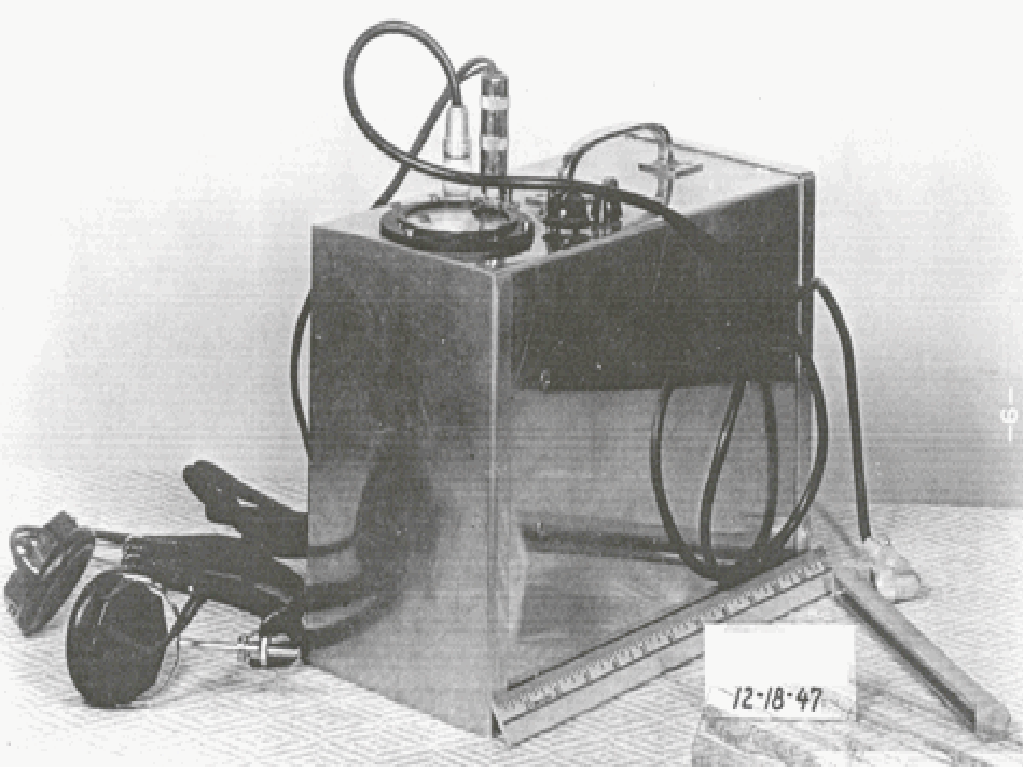
Los Alamos Pee Wee Mark I Model 41 1947
The Pee Wee could be used with three different types of alpha probes. There were two pencil type probes and one 4” x 6” pancake-type probe.
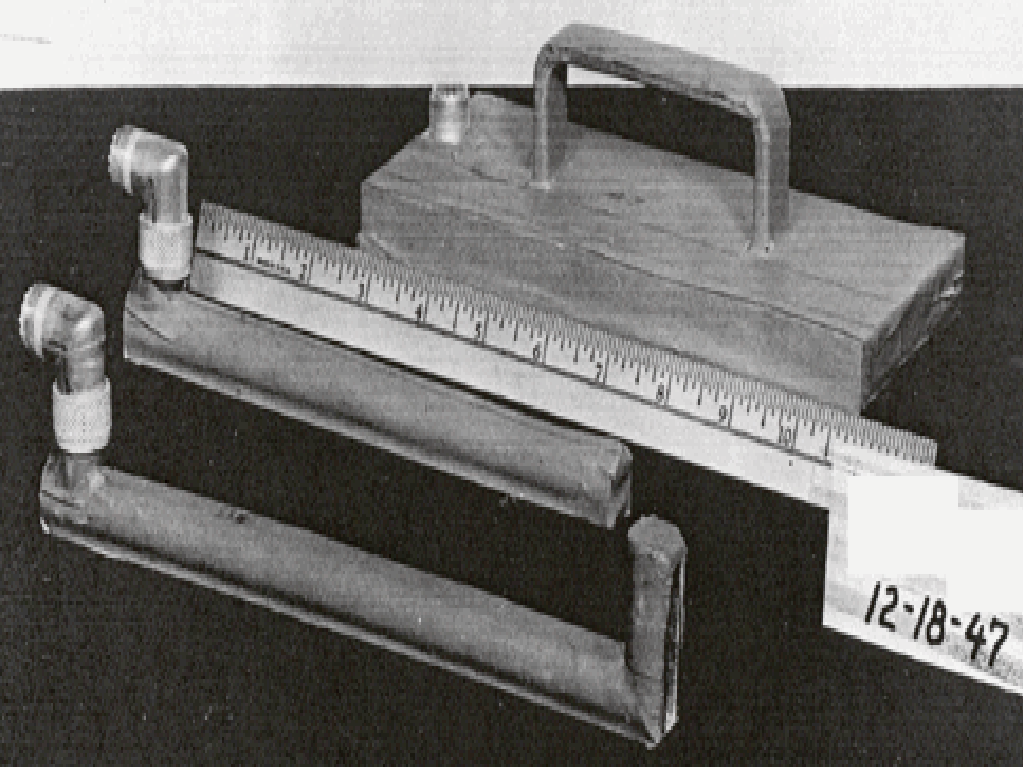
Los Alamos Pee Wee Alpha Probes 1947
One of the early instruments developed at the Hanford Engineering Works was the Juno, an alpha, beta and gamma survey meter, developed in part by C. Gamertsfelder around 1945. It is named after the queen of the gods in Roman mythology, the wife of Jupiter. The unit had a level control for aluminum and acetate filters to screen out beta and alpha radiation, respectively.
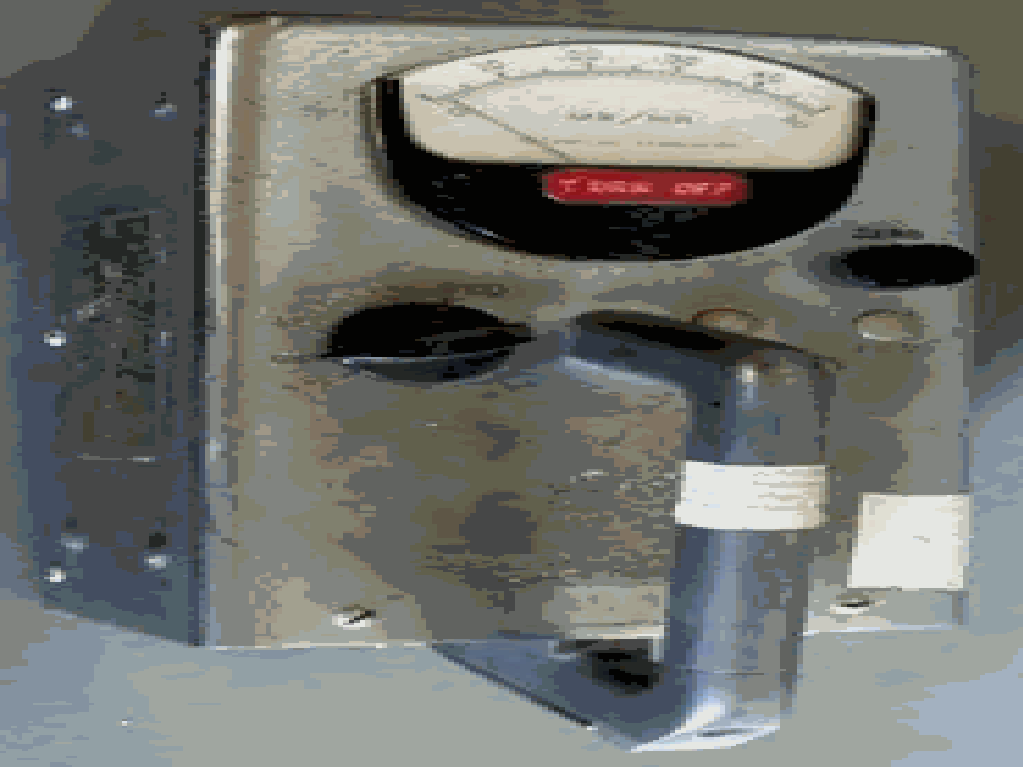
Early Juno with aluminum handle
A portable fast neutron survey meter was developed at Hanford in 1948 called the “Neut”. It was developed because the Chang and Eng meter was too big and heavy and unreliable. The Neut had a range of 0.5 mR/h to 10 R/h. It used separate argon and methane chamber principle with a modified Zeuto measuring circuit. In operation, the gamma measurement was made using the argon chamber. The current for the two chambers is then balanced. The methane chamber is then used to measure the fast neutron reading.
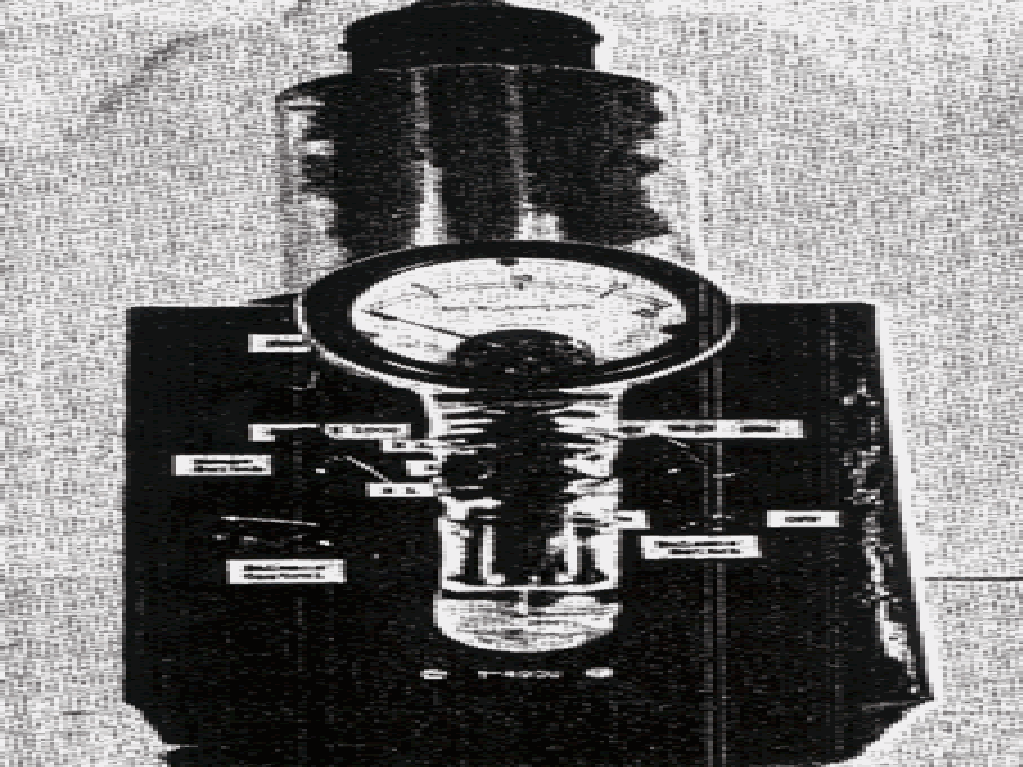
Hanford Fast Neutron Meter “Neut” 1948
This sections provides an introduction into the development of radiation detectors during the Manhattan Project. Considerable more detail is provided in the catalog section Atomic Energy Commission laboratories.
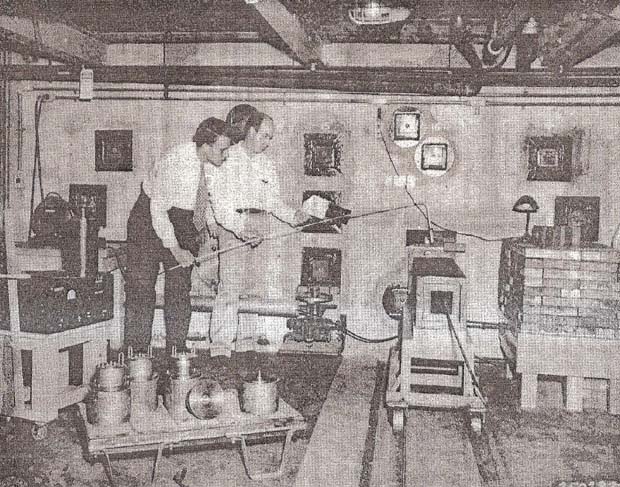
Area monitor on the left monitors for radiation to protect the workers removing radioactive material from the Oak Ridge Reactor, 1947